Material feature · Fabric
The anatomy of a lampshade
The upper opening, lower circumference and fabric surface of a shade relate to light in different ways. Let us try reading a table lamp through these three areas.
4-minute read
Lighting principles are general design information. The diagram explains the parts of the shade; product dimensions and light distribution should be obtained from its technical details.
Upper opening
Consider the area above the shade as well.
Side surface
Examine the fabric's texture and translucency.
Lower opening
Read the width of the shade and its relationship with its surroundings.
Opening, surface, opening
Alongside a table lamp's fabric colour, consider the geometry of its shade. The upper opening, side surface and widening lower opening create different paths between the light source and its surroundings.
Louis Poulsen's design guide explains how shade shape and material work together to direct light. A translucent surface may spread some light sideways; the shade's openings allow light to emerge above and below. Read about the elements that shape light.
A pleat adds a line to the surface
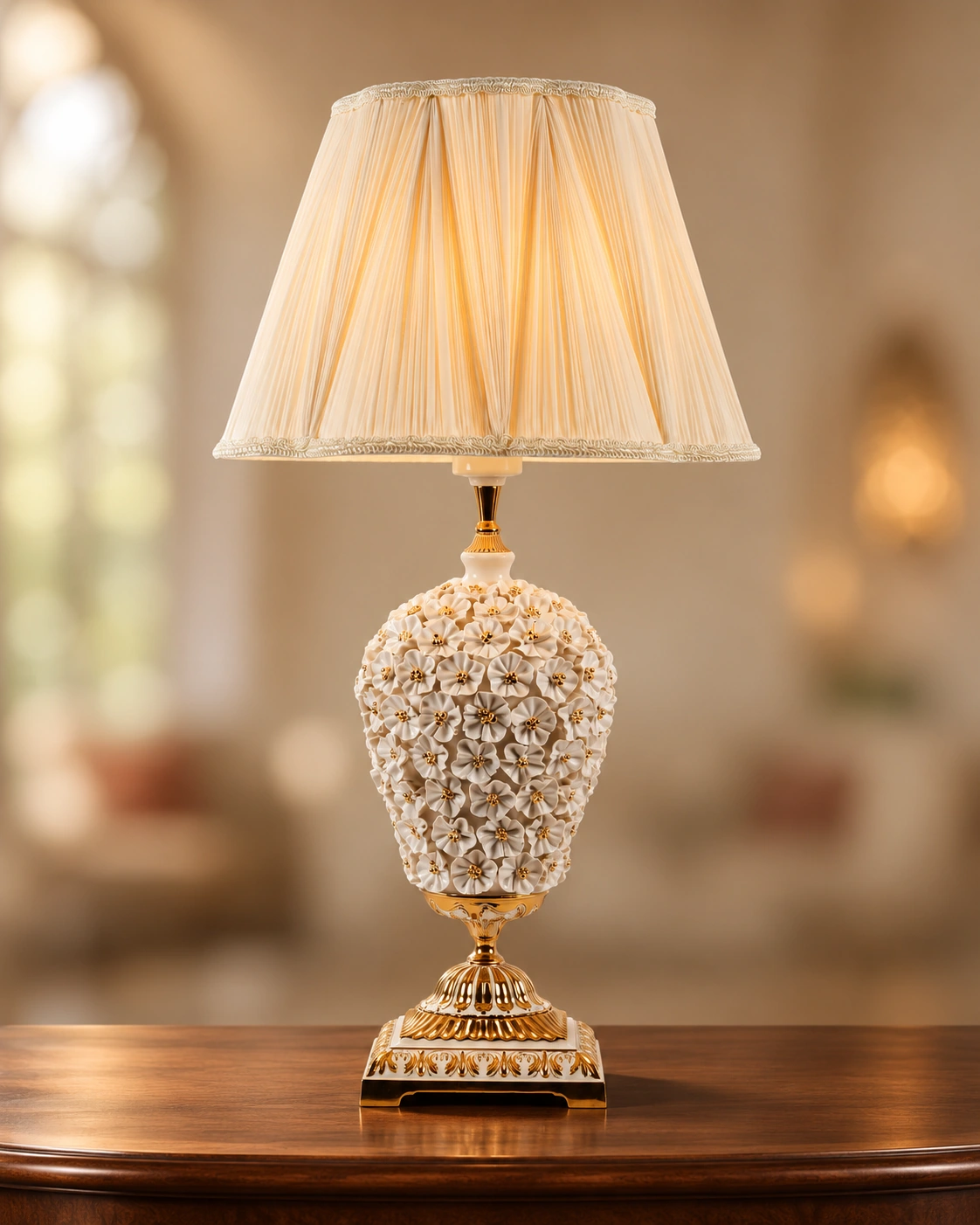
Ivory folds , a piece in the selection, has close lines running from top to bottom along its shade. These are pleats formed by folding the fabric. Through these folds, a plain colour divides into narrow surfaces catching light or falling into shadow.
Let your eye travel around the shade. Although the fabric's tone stays the same, different faces of the folds turn towards you. Then look at the body: floral relief replaces the shade's regular lines. Texture distinguishes two sections that remain within a similar colour family.
Do not assume every bright area on the shade has the same cause. Photographic lighting, ambient room light and the light source inside may all contribute to the image. Precise lighting performance cannot be measured from a single photograph.
Distinguish ambient light from reading light
Softened light can establish the overall feeling of a room, while directed light can help illuminate a particular surface. The shade contributes to the balance between these effects, but it does not alone determine whether a lamp is suitable for reading.
When choosing for a spot beside a table or chair, assess together whether the light source is directly visible at your seated height, where light reaches the page and whether nearby surfaces reflect it. Ask for technical information on the fitting, suitable bulb and limits of use for the product.
Move between the two shades
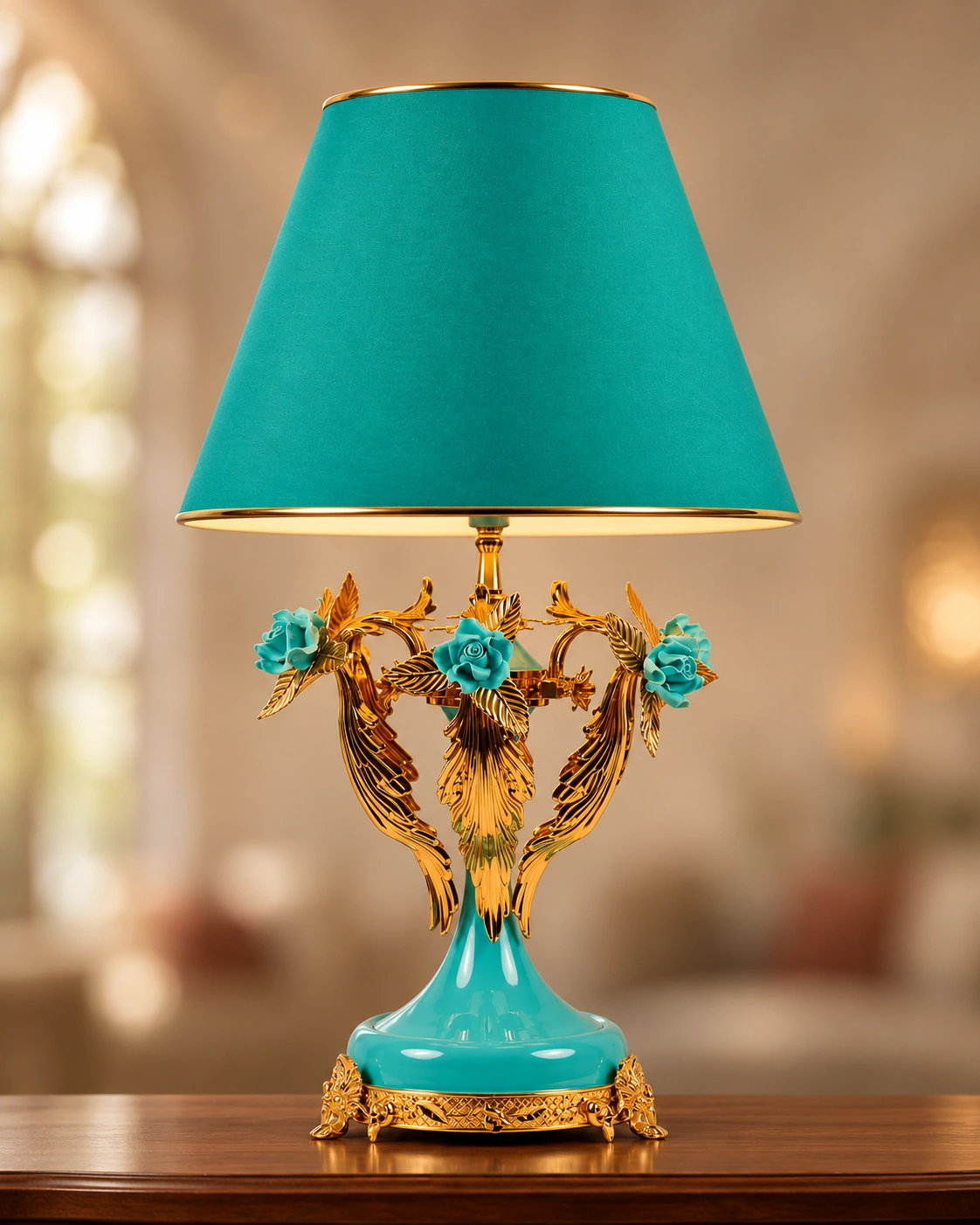
After the pale pleated shade Companions to turquoise ; look at this product's simpler surface. Follow how attention shifts from the fabric's lines to colour, then to the leaves on the body. Continue the comparison through form and texture.
When considering your table lamp for a particular spot, note three things together: the exact shade dimensions, the overall height and the compatible light source. Complete your visual impression with these verified details.
Sources
The sources support general cultural and design information. The origins and technical details of products in the selection are considered separately.