Material feature · Glass
How light changes glass
A coloured glass surface both reveals and transforms light. The light source, the form of the glass and the dark lines between pieces change how the same motif appears.
4-minute read
Historical information about glass techniques is presented with sources. Each piece's production technique and period are assessed through its own record.
Incoming light
Notice the direction of the surrounding light.
Glass surface
Observe colour, thickness and surface appearance.
Visible colour
Describe the light and dark areas together.
The colour of glass, the light we see
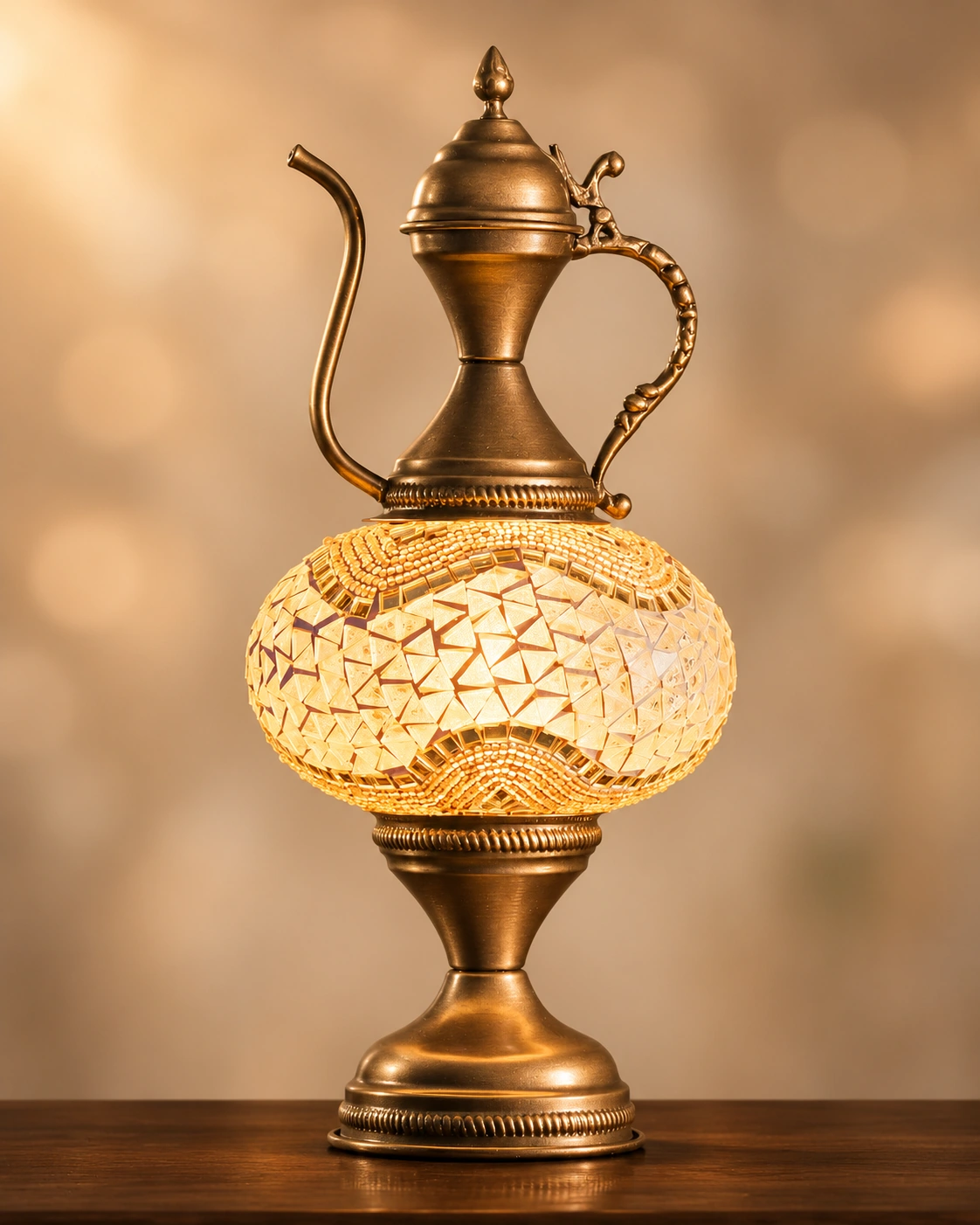
When looking at coloured glass in daylight, we see both reflections on its surface and light coming from behind it. In a glass shade lit from within, colour may become more pronounced in the illuminated surface itself. A lamp therefore offers a different visual experience when off and when on.
The Victoria and Albert Museum's study of stained glass explains how its light-transmitting quality can transform a space as daylight changes. In the museum's historical examples, adding metal oxides to the glass mixture is one way of producing colour. Read the V&A's feature on stained glass.
This general information does not establish that every glass product in the catalogue is coloured in the same way. Details such as colouring, glass type and joining technique should be checked for each product.
The dark line between pieces
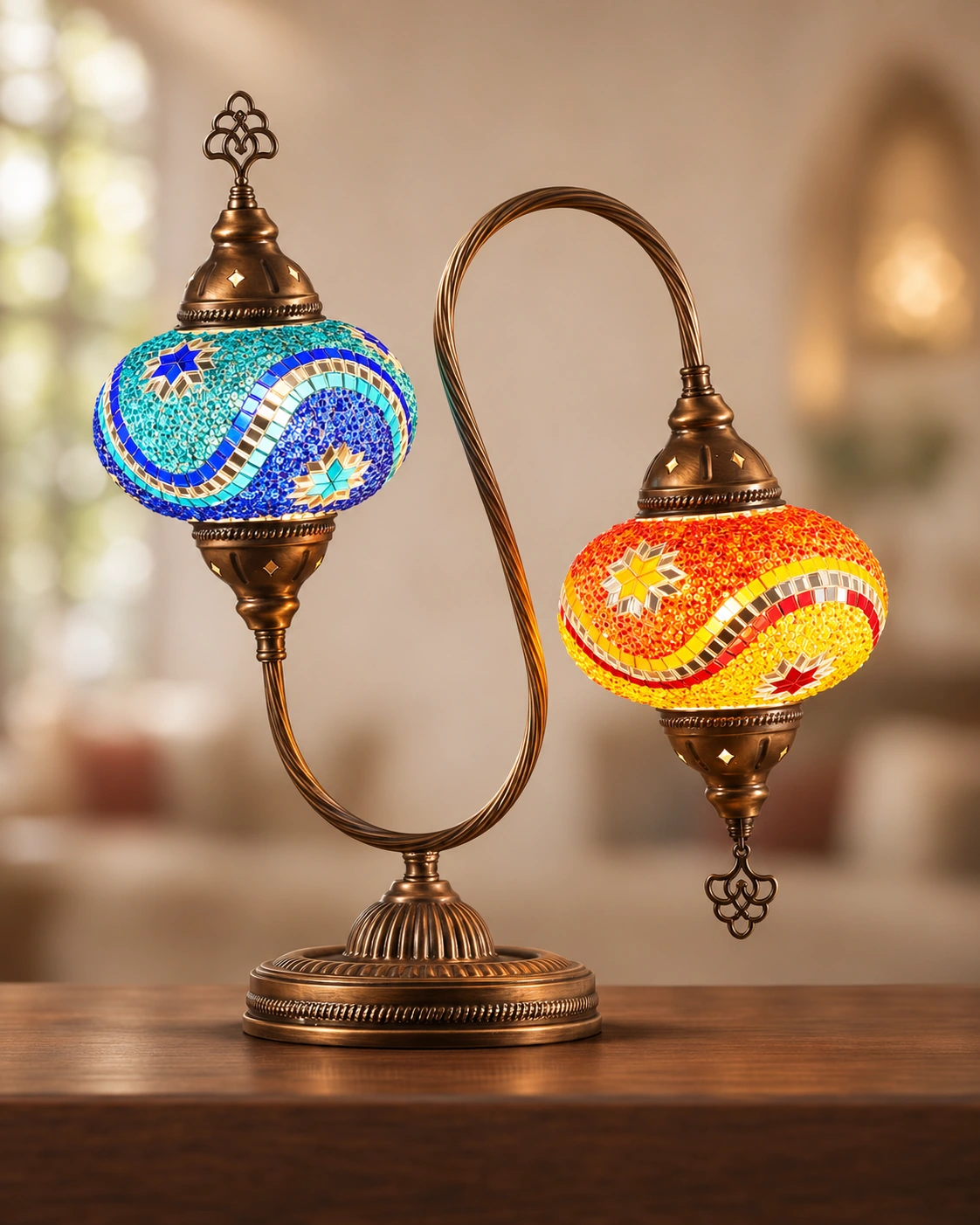
Night and day has two round shades carrying a similar wave movement in different colours. Blue and turquoise gather on one side, amber and orange on the other. The dark lines between the pale areas of glass make the pattern as readable as the areas themselves.
Follow the curve of a shade with your eye. A piece that looks wide head-on may appear narrower towards the edge. Where the pattern seems denser, are the pieces actually smaller, or does the curvature of the surface change its appearance? Try to distinguish the two in the photograph.
With the light on and off
Comparing a product in two states requires the same angle and similar surroundings. When the shade is unlit, it may be easier to examine the metal surface and exterior of the glass; when lit, the illuminated areas of colour become clearer.
When deciding on colour and technical specifications, ask for current photographs of the same product both lit and unlit. As the light source's colour characteristics may also affect how the glass appears, include a question about compatible bulbs.
Keep a colour notebook
Study the image for a few seconds and write down three colours. Then find the darkest area, the brightest point and the transition between them. This small exercise helps you describe where and how colour appears, rather than simply calling a product “blue” or “yellow”.
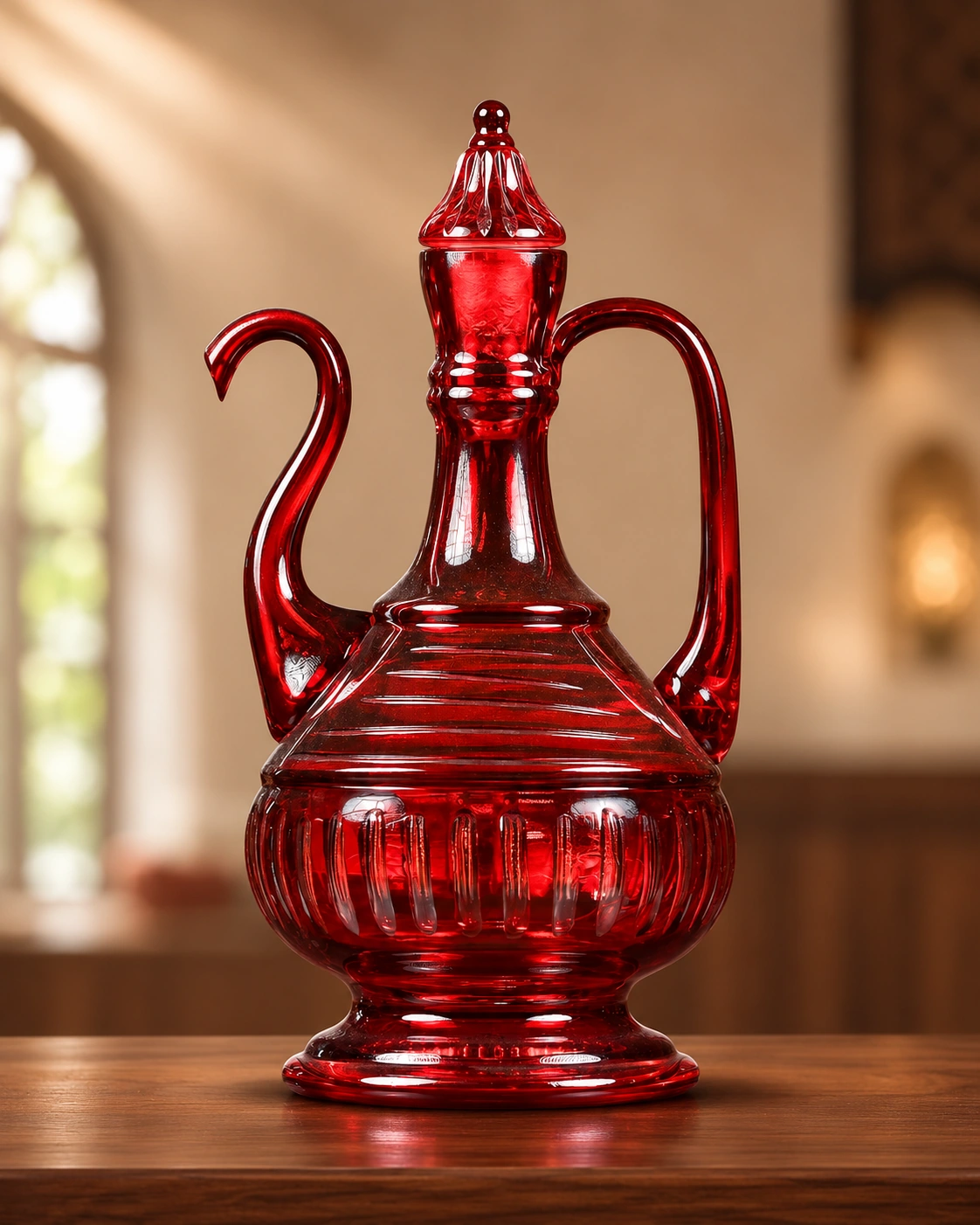
Next The colour glass carries ; look at the edges of this object. Here, unlike a shade containing a light source, you can read surface reflections created by external light on red glass. A shared material calls for a different way of looking at each object.
Sources
The sources support general cultural and design information. The origins and technical details of products in the selection are considered separately.