Artwork reading · Mosaic
Reading a figure in mosaic
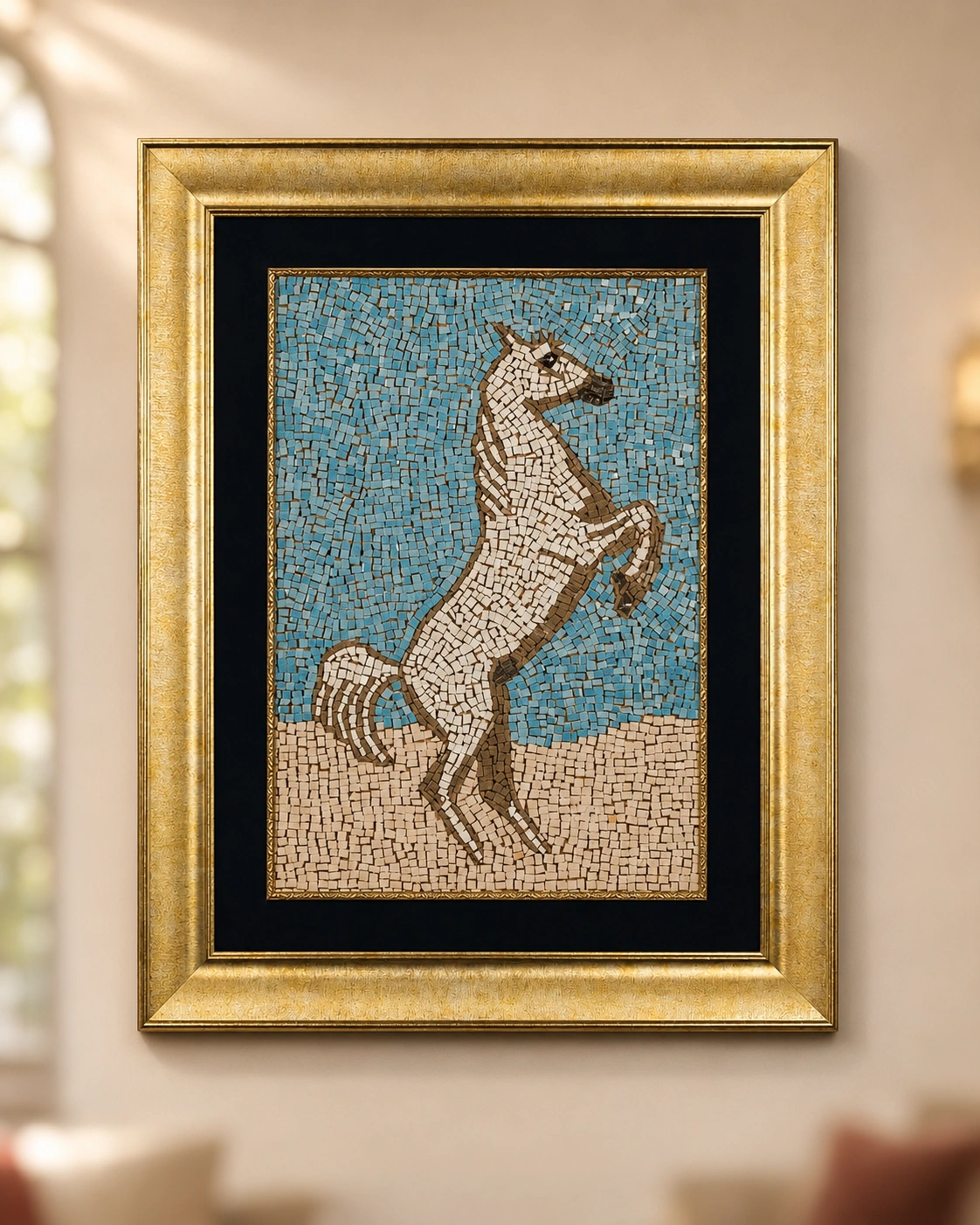
From a distance, a movement; up close, hundreds of small directions. Beginning with the silhouette of the rearing horse, we seek the path the eye follows across the mosaic surface.
4-minute read
Historical information draws on sources; comments about a work in the selection draw on its visible composition. The work's artist, period and material details are verified separately.
Piece
A single colour and surface.
Arrangement
The direction of adjacent pieces.
The whole
Figure and movement read from a distance.
See the movement first
Before approaching an image, the eye distinguishes its broadest light and dark areas. Here, a cream-coloured horse appears as a single figure against turquoise. The curling forelegs, rising neck and swept-back tail can be read together. The movement is clear even before individual mosaic pieces become visible.
Move your gaze from the horse's hind legs to its neck. The rising body extends that line upwards; the curve of the tail brings the eye back down. The dark mount leaves a quiet space around the dynamic surface. Consider this space part of the work's appearance, too.
Follow the direction of the piece
The small units making up a mosaic surface are called tessera . Getty's art and architecture vocabulary associates these pieces with materials such as marble, glass, stone or ceramic. Explore the source of the term.
Now move closer to the shoulder and neck. Light and dark pieces define the curve of the body through their direction. Compare a row following the horse's outline with the more even distribution filling the background. One directs the gaze; the other creates an area of colour.
Looking closely, you begin to notice how the figure is constructed, which line becomes sharper and where a gentler transition is sought.
Materials, light and history
Mosaic is a surface that can be formed from different materials. A group of tesserae dated to the sixth century by The Met documents the use of glass and gold leaf. This historical example shows how a mosaic surface can engage with light as well as colour. View the museum record.
The museum record offers a historical comparison. The actual material composition and production details of the horse mosaic in the selection are verified for that specific product. A visual reading and a work's factual record answer different questions: one explains how we see; the other, what we know about the object.
An exercise in looking from two distances
- Look at the image as a whole; describe the figure through three broad areas of colour.
- Choose the line of the horse's shoulder and look more closely at the direction of the pieces that form it.
- Return to the whole; after seeing the detail, notice whether your perception of the movement has changed.
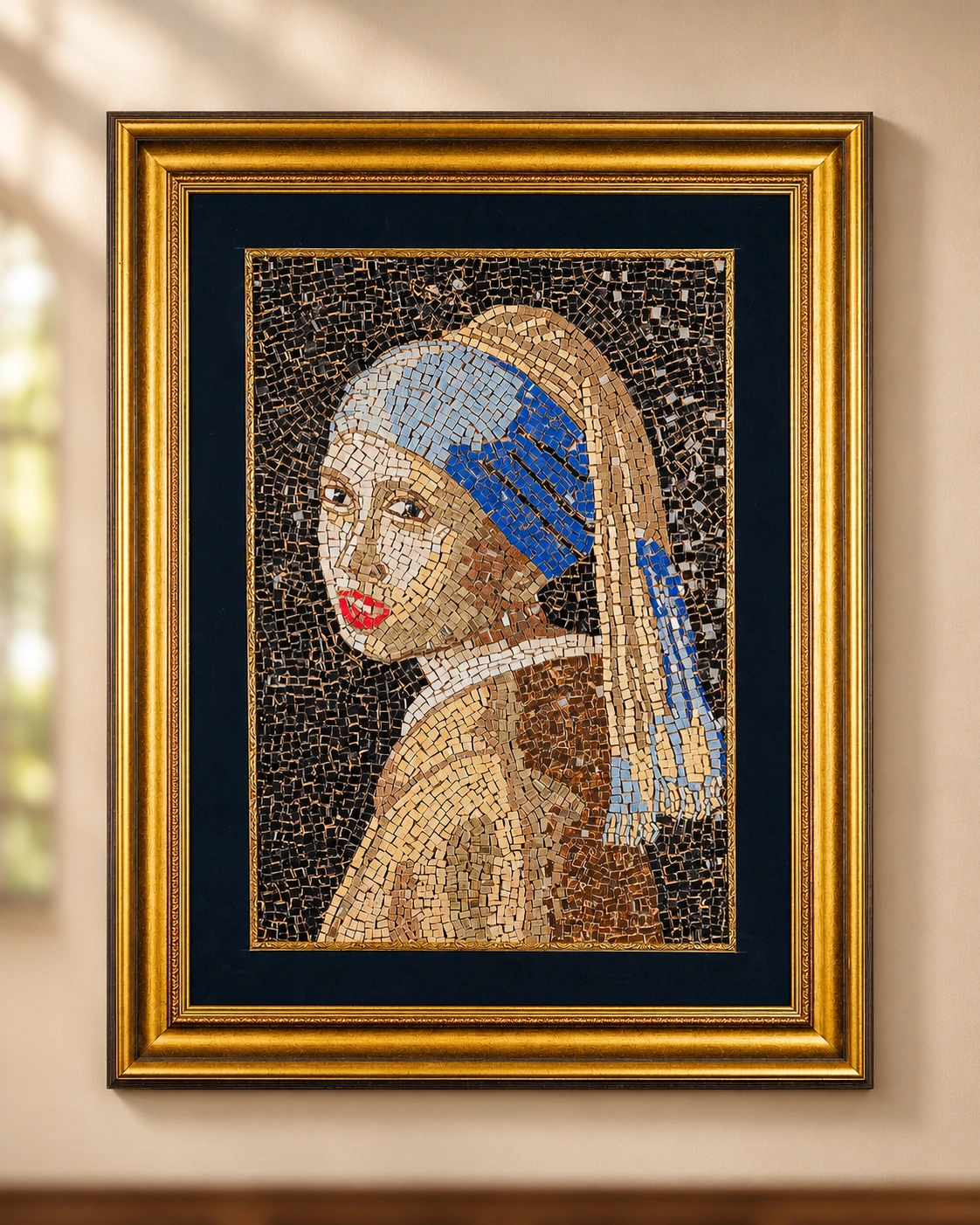
Try the same exercise In the mosaic interpretation of Girl with a Pearl Earring through the relationship between face, headdress and earring. The same technique brings different details forward in another figure.
Sources
The sources support general cultural and design information. The origins and technical details of products in the selection are considered separately.